Graphic Design Career Paths: Where the Skills Lead
A graphic design career rarely stays inside graphic design. The core skills, visual hierarchy, typography, layout systems, and the habit of solving problems within constraints, transfer into a wide range of adjacent roles. Some are a small step sideways, like moving from brand design into brand strategy. Others are a bigger jump, like moving into UI/UX or motion design, and require picking up genuinely new skills on top of what design training already gave you.
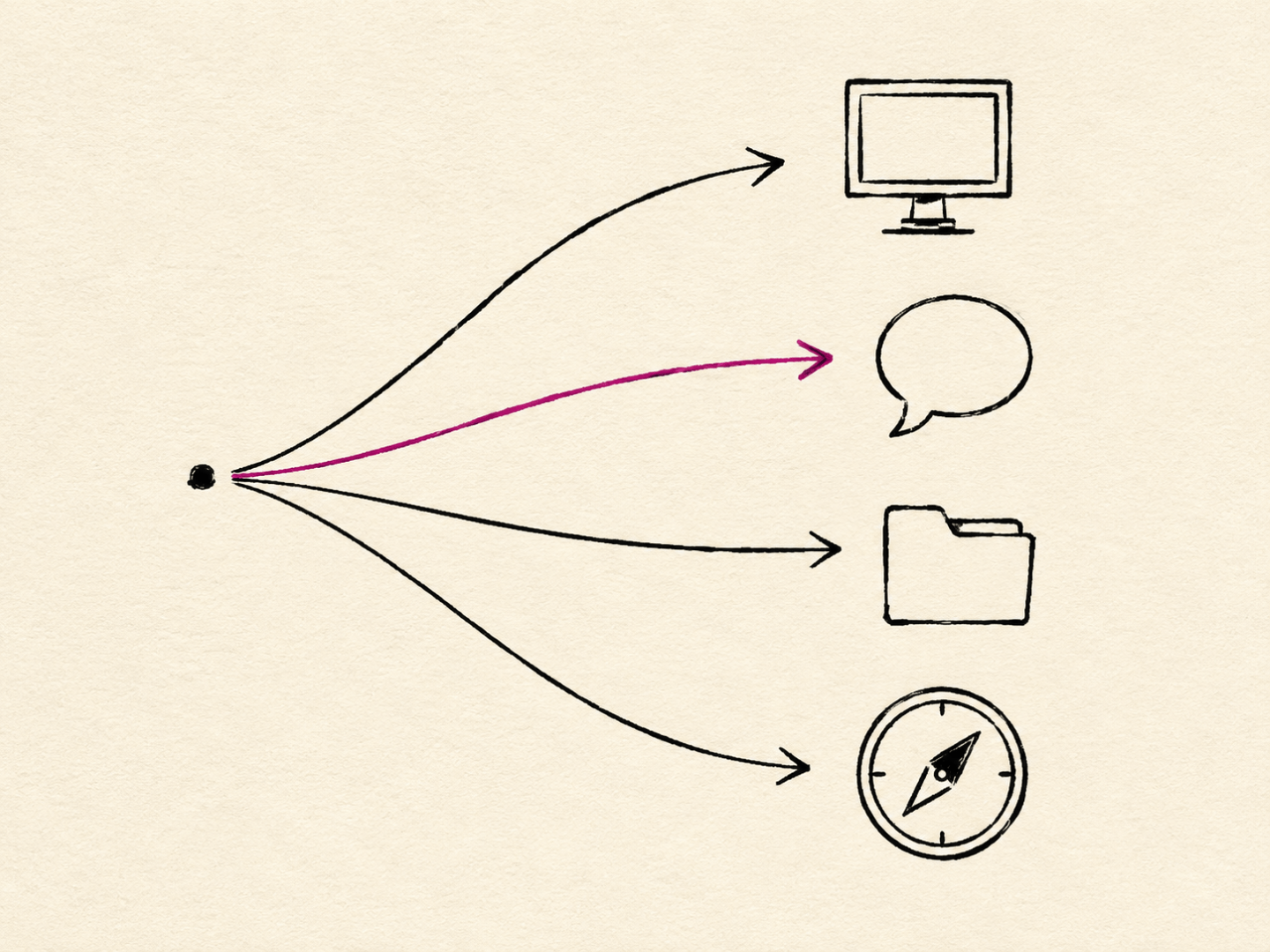
This isn't a list of job titles pulled from a careers board. It's a look at what actually carries over from a graphic design background into each of these paths, and what doesn't, so the gaps are as clear as the overlaps.
- The skills that transfer most reliably are visual hierarchy, typographic judgement, and the ability to solve a brief within constraints, not software proficiency alone.
- UI/UX, product design, and motion design require genuinely new skills (research methods, interaction patterns, animation timing) on top of a design foundation, not just a new tool.
- Brand strategy and art direction sit closer to graphic design itself, often reachable through experience and a shift in scope rather than formal retraining.
- Freelance and agency paths are a structural change to how you work, not a new discipline, and come with business skills most design courses don't teach.
- Australian salary and demand data for these roles varies by state and specialisation and hasn't been sourced for this piece. Seek and the Australian Government's Jobs and Skills site are the places to check current figures.
Why graphic design skills transfer so well
Graphic design training builds a specific kind of visual literacy: how to organise information so it reads clearly, how typography carries tone as much as text, how colour and spacing direct attention, and how to work within a brief that has real constraints, a budget, a deadline, a client with opinions. None of that is specific to posters or packaging. It's the same skill set that underpins a well-designed app screen, a coherent brand strategy, or a piece of motion graphics that actually communicates something.
What also transfers, and gets undervalued, is the process. Design students learn to take vague input, ask the right questions, produce concepts, take feedback that contradicts itself, and land on something that works. That loop, brief, iterate, defend, refine, is the actual job in most creative and strategic roles, not just design ones.
What doesn't automatically transfer is domain-specific knowledge. A graphic designer moving into UI/UX doesn't already understand usability testing or information architecture. Someone moving into motion design doesn't already know animation timing or sound design. The visual foundation gives you a head start, not a shortcut.
UI/UX design
UI/UX is the most common next step for graphic designers, and the overlap is real. Layout, visual hierarchy, typography, and an eye for consistency all carry straight across into interface design. Where it diverges is in the research and structural side of the discipline: user research, information architecture, interaction patterns, usability testing, and designing for behaviour rather than just appearance.
Graphic designers moving into UX often find the visual half of the job comes naturally and the research half is the actual learning curve. Understanding how UI and UX differ as disciplines, and where a graphic design background sits relative to each, is worth reading before committing to this path: ui vs ux design difference.
Brand strategy
This is often the shortest distance from where a graphic designer already sits. Anyone who has worked on brand identity projects has already been exposed to positioning, tone of voice, and the reasoning behind visual decisions, even if the strategic thinking was being done by someone else on the project. Moving into brand strategy means taking on that reasoning directly: market research, competitor positioning, verbal identity, and translating strategic direction into a brief someone else might design from.
It's a natural move for designers who found themselves more interested in why a brand looks the way it does than in producing the final assets. For more on what brand identity actually covers, see what is brand identity.
Art direction
Art direction is graphic design with more scope and less hands-on production. An art director sets the creative vision for a campaign or project and guides a team of designers, photographers, or illustrators to execute it, rather than producing every asset themselves. The overlap is direct: you need to already understand design fundamentals well enough to judge and direct someone else's work, which usually means several years of hands-on design experience first.
The gap is less about new technical skills and more about leadership: giving feedback that improves work instead of just redirecting it, managing multiple creatives with different strengths, and holding a consistent vision across a project with many contributors.
Motion design
Motion design takes graphic design's sense of composition and timing and applies it to movement. Someone with a strong grounding in layout and typography already understands what makes a frame work, which is a genuine advantage. What's missing is a different skill set entirely: animation principles like easing and timing, working in tools like After Effects rather than static design software, and often sound design or at least an understanding of how audio and visuals work together.
This is one of the bigger jumps on this list. The visual foundation helps, but motion is closer to learning a new discipline than extending an existing one.
Product design
Product design overlaps heavily with UI/UX but sits at a broader level, involving the whole product experience rather than just the interface layer. A graphic design background gives a genuine head start on the visual and interaction side. What it doesn't provide is the product thinking: understanding business constraints, working closely with engineering, prioritising features against user needs, and making trade-offs that balance design quality against what's actually buildable.
Designers who enjoy the problem-solving side of design, not just the visual output, tend to gravitate here. It's less about aesthetics and more about how the whole thing works together.
Marketing and creative roles
In-house marketing and content design roles are a common landing spot, particularly for designers who want more variety than a single agency client roster or a narrow production role. These roles draw on the same visual skills but apply them across a broader mix of formats: social content, email design, campaign assets, sometimes copy. The overlap is strong on execution. The gap is usually strategic: understanding campaign goals, channel-specific requirements, and how design decisions tie back to marketing outcomes rather than just visual quality.
This path suits designers who like variety and faster turnaround over deep, singular creative projects.
Freelance and agency paths
This isn't a new discipline, it's a structural shift in how the work happens. Moving from in-house to freelance, or from a smaller studio into agency work, changes what the job demands day to day: client acquisition, pricing your own time, managing multiple projects at once, and handling the business side that an employer would otherwise absorb.
The design skills don't change. What's genuinely new is everything around them: pitching, scoping projects honestly, invoicing, and managing client relationships without a project manager between you and them. This is often underestimated by designers considering the jump, and it's worth being honest about before making the move.
Testing the waters before committing
Before retraining or job-hunting into any of these paths, it's worth testing the overlap on a small scale first. A few practical ways to do that:
- Take on a side project in the adjacent field, a small UI redesign, a motion piece for an existing brand, a brand strategy exercise for a project you already know well.
- Talk to people already doing the job. An informational conversation with a UX designer or art director will surface the parts of the role that don't show up in a course outline or job ad.
- Audit your existing portfolio against the new field's expectations. A portfolio built for graphic design roles usually needs reshaping, not just relabelling, before it reads as UX or motion work to someone hiring for that discipline.
- Look at actual job postings in the target field, not just the job title, but the listed responsibilities, to see how much of the day-to-day is genuinely new versus an extension of what you already do.
Australian salary ranges, demand levels, and hiring trends for these roles vary meaningfully by state, specialisation, and experience level, and haven't been sourced for this piece. Seek's salary data and the Australian Government's Jobs and Skills website are reasonable starting points if that's the next thing you want to check.
Where this actually leads
None of these paths make a graphic design background redundant. They extend it. The designers who move into UX, brand strategy, art direction, motion, product, or marketing roles tend to be the ones who treat the design foundation as a starting point rather than a ceiling, and who are honest with themselves about which parts of the new role are genuinely new versus a relabelled version of what they already do well.
The shift that matters most isn't the job title. It's whether you're solving the same kind of problem in a new context, or actually taking on a different kind of problem altogether. Both are valid moves. Knowing which one you're making changes how you prepare for it.
Frequently asked questions
- Do I need to go back to study to move from graphic design into UX?
- Not necessarily. Many designers move into UX through short courses, self-directed learning, and portfolio projects rather than a full degree, particularly if they already have strong visual design skills. The research and testing side of UX benefits from structured learning, but it doesn't always require formal qualifications to break in.
- Is motion design a good fit for someone who only knows static design?
- It can be, but expect a real learning curve. The compositional instincts from static design carry over, but animation principles, timing, and tools like After Effects are a genuinely new skill set that takes deliberate practice to build.
- Which of these paths pays the most?
- Pay varies by state, seniority, industry, and specific employer, and reliable current figures for the Australian market haven't been sourced for this piece. Seek and the Australian Government's Jobs and Skills website are better places to check current, location-specific numbers than a general guide.
- Can I move into art direction without managing people first?
- Art direction almost always involves guiding other people's work, even informally, so some experience leading or reviewing others' output helps. Freelance art direction on smaller projects is sometimes a lower-friction way in than an in-house leadership role.
If you're weighing up a career move rather than a study path, our guide to how a graphic design engagement actually runs is a useful read for understanding the industry from the client side too. Learn more about how Design Junction approaches design careers and skills on the about page.