UI vs UX Design: What's the Actual Difference?
UX design is the discipline of shaping how a product works: the flow, the logic, and the decisions a user makes to get from one point to another. UI design is the discipline of shaping how a product looks and feels to interact with: the layout, the typography, the colour, and the response to every tap or click. They get treated as one job because the same person often does both, especially in small teams. That doesn't make them the same discipline, and mixing them up is where a lot of design briefs go wrong.
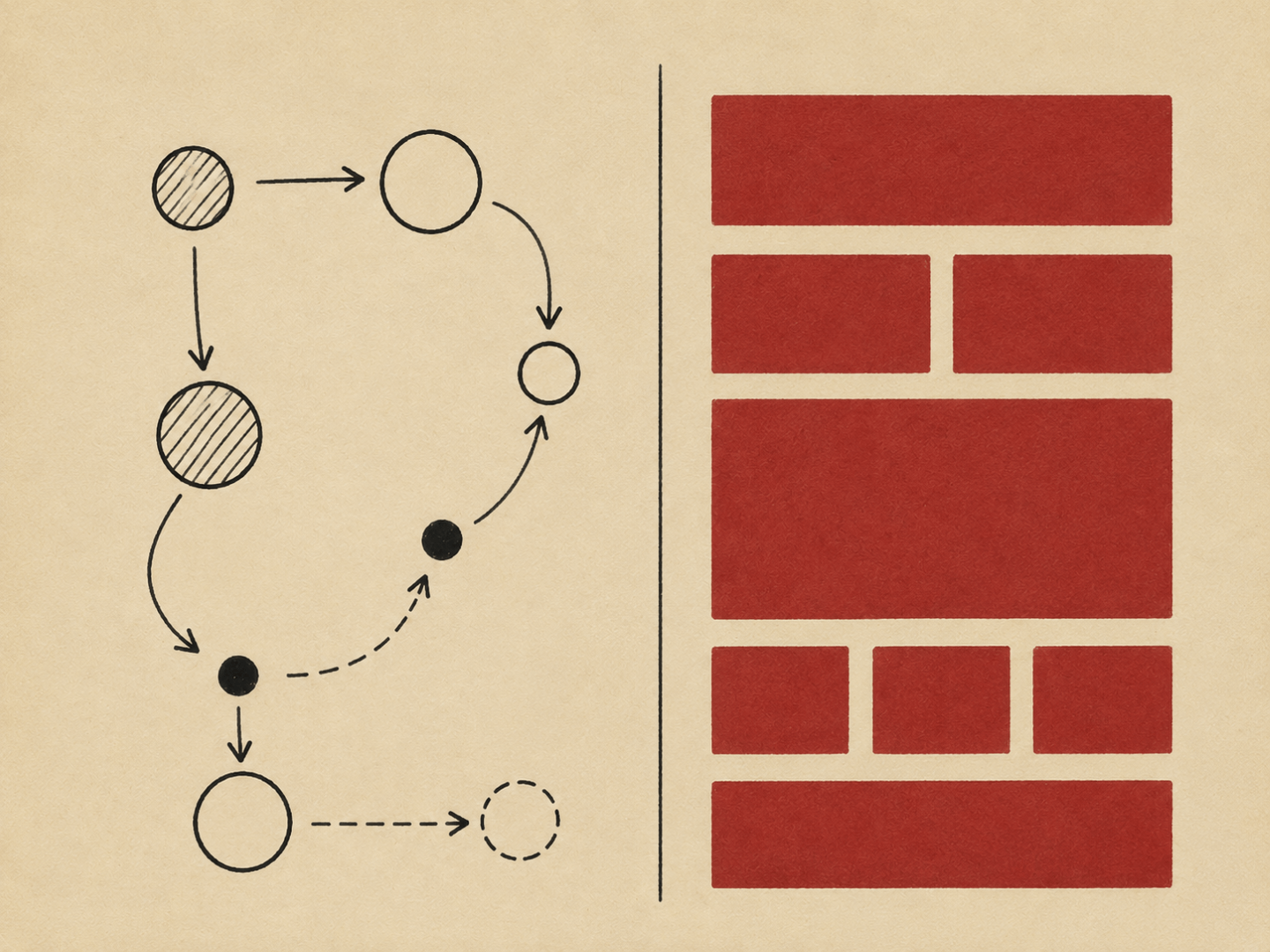
- UX design covers how a product works: research, flow, structure, and decision-making. UI design covers how it looks and feels to use: visual layout, typography, colour, and interaction detail.
- In small teams and agencies, one person often handles both roles, but the underlying tasks stay distinct rather than blending into a single skill.
- Briefing "I need a UX designer" typically gets you research, wireframes, and information architecture. Briefing "I need a UI designer" gets you visual design and a polished interface, not a rebuilt user flow.
- A product can have excellent UI and still fail commercially if the UX underneath it is broken, and the reverse is just as common.
- Hiring the wrong specialist for the actual problem is one of the most frequent and expensive mistakes small businesses make when commissioning design work.
What UX design is actually responsible for
UX design starts before anything gets drawn. A UX designer's day usually involves user research, competitor analysis, mapping out how someone moves through a task, and working out where they'll get stuck or drop off. The deliverables that come out of this stage are wireframes, user flows, site maps, and sometimes a clickable prototype with no visual styling at all, just boxes and arrows showing what happens when someone clicks a button.
The questions a UX designer is answering are structural. Does the checkout process ask for information in the right order? Does the navigation match how a customer actually thinks about the product catalogue, or how the business happens to have organised its warehouse? Can someone complete the task they came to complete without needing to guess? None of this depends on what colour the buttons are. A UX designer can do excellent work in greyscale wireframes and never touch a font.
What UI design is actually responsible for
UI design picks up once the structure is agreed and turns it into something a person actually looks at and touches. This is the visual and interactive layer: colour palette, typography, spacing, iconography, button states, animation, and the overall design system that keeps everything consistent across a site or app. A UI designer decides what a hover state looks like, how much contrast a heading needs to be accessible, and whether a form field should show its error message inline or in a summary at the top.
Good UI design makes an interface feel coherent and trustworthy. It's the reason two products with identical functionality can feel completely different to use, one polished and confident, the other cluttered and cheap. But UI design is working within a structure someone else defined. If that structure is wrong, no amount of visual polish fixes it.
Where UX and UI overlap in a small team
In agencies and small businesses, budget rarely stretches to a dedicated specialist for each discipline, so one designer often covers both. That's a practical reality, not a sign the disciplines have merged. A generalist doing both jobs well is still doing two different kinds of thinking, usually in sequence: work out what needs to exist and how it should behave, then work out how it should look and feel.
The overlap that does matter is literacy, not job title. A UI designer who understands UX principles won't decorate a broken flow into something that looks fine and still fails. A UX designer with a visual eye can prototype convincingly enough that stakeholders actually engage with the testing process instead of glazing over at wireframes. The best small-team designers are strong in one discipline and competent in the other, which is different from treating the two as interchangeable.
Why "I need a UX designer" and "I need a UI designer" aren't the same brief
This is where the distinction stops being academic. If a business briefs a UI designer to fix a checkout process that's losing customers, the most likely outcome is a checkout process that looks better and still loses customers, because the problem was never visual. If a business briefs a UX designer expecting a finished, on-brand interface, they'll get a validated structure and a set of wireframes, not something ready to launch.
Getting the brief right means being specific about what's actually broken or missing. "Customers can't work out how to book a second appointment" is a UX problem. "Our site looks dated next to our competitors" is a UI problem. "We're not sure why people abandon the enquiry form" could be either, and probably needs research before anyone touches a screen. Our guide to how to brief a graphic designer covers this in more depth, and the same logic applies directly to UX and UI briefs.
Where the confusion causes real problems
The most common failure is hiring the wrong specialist for the actual problem. A business with a structural issue, confusing navigation, a checkout that loses people at step three, a form nobody finishes, hires a UI designer because "the site needs a redesign" sounds like a visual problem. The redesign ships, it looks better, and the underlying issue is untouched because nobody addressed the flow.
The second failure shows up on the client side of the relationship. Someone evaluates a design, feels that something's wrong, and can only articulate it as "I don't love it." Without the vocabulary to separate a UI problem from a UX problem, feedback stays vague and the fix stays vague too. A client who can say "the checkout flow doesn't tell me what happens after I submit payment" is describing a UX issue precisely. A client who says "I just don't like it" is describing a UI reaction that a designer then has to reverse-engineer into something actionable. Knowing the difference between the two disciplines gives a business owner or stakeholder the language to give feedback that's actually useful.
UI and UX as part of the bigger design picture
UI and UX aren't standalone categories, they're core sub-disciplines that sit inside broader design work. If you're building a new site, both come into play alongside the wider process covered in our guides to what web design actually involves and what digital design covers. Understanding where UI and UX fit inside that bigger picture makes it easier to brief a project accurately from the start, rather than discovering the gap halfway through.
FAQs
- Can one person do both UX and UI design?
- Yes, and in small teams this is the norm rather than the exception. A single designer covering both roles still needs to think through structure before styling, even if the same person does both stages. The risk isn't one person doing both jobs, it's one person doing both jobs without treating them as separate stages of thinking.
- Which comes first, UX or UI?
- UX comes first. Structure, flow, and user research inform what actually needs to exist before anyone makes visual decisions about how it looks. Starting with UI before UX is usually what produces a beautiful interface built on a flawed structure.
- Do I need both a UX and UI designer for a small project?
- Not necessarily as two separate hires. What matters is that both kinds of thinking happen somewhere in the process, whether that's one generalist working through both stages or a small studio splitting the work internally. The risk is skipping the UX stage entirely and going straight to visuals.
- Is UX design only relevant for apps and websites?
- No. UX principles apply to any product or service where someone has to complete a task, including physical retail layouts, booking systems, and printed forms. The core questions, can someone complete what they came to do without confusion, apply well beyond screens.
If you're briefing a design project and aren't sure whether you need UX thinking, UI polish, or both, our guide to briefing a graphic designer is a good next step, or get in touch directly.