What Is Digital Design? (And How It Differs From Graphic Design)
Digital design is the practice of creating visual and interactive content built specifically for screens, apps, websites, social platforms, and other on-screen environments. It uses the same foundations as graphic design, colour, typography, layout, hierarchy, but applies them to formats that move, respond, and get used rather than just viewed. A poster is graphic design. That same poster resized for Instagram, timed to catch a scroll, and built around a swipe-up action is digital design.
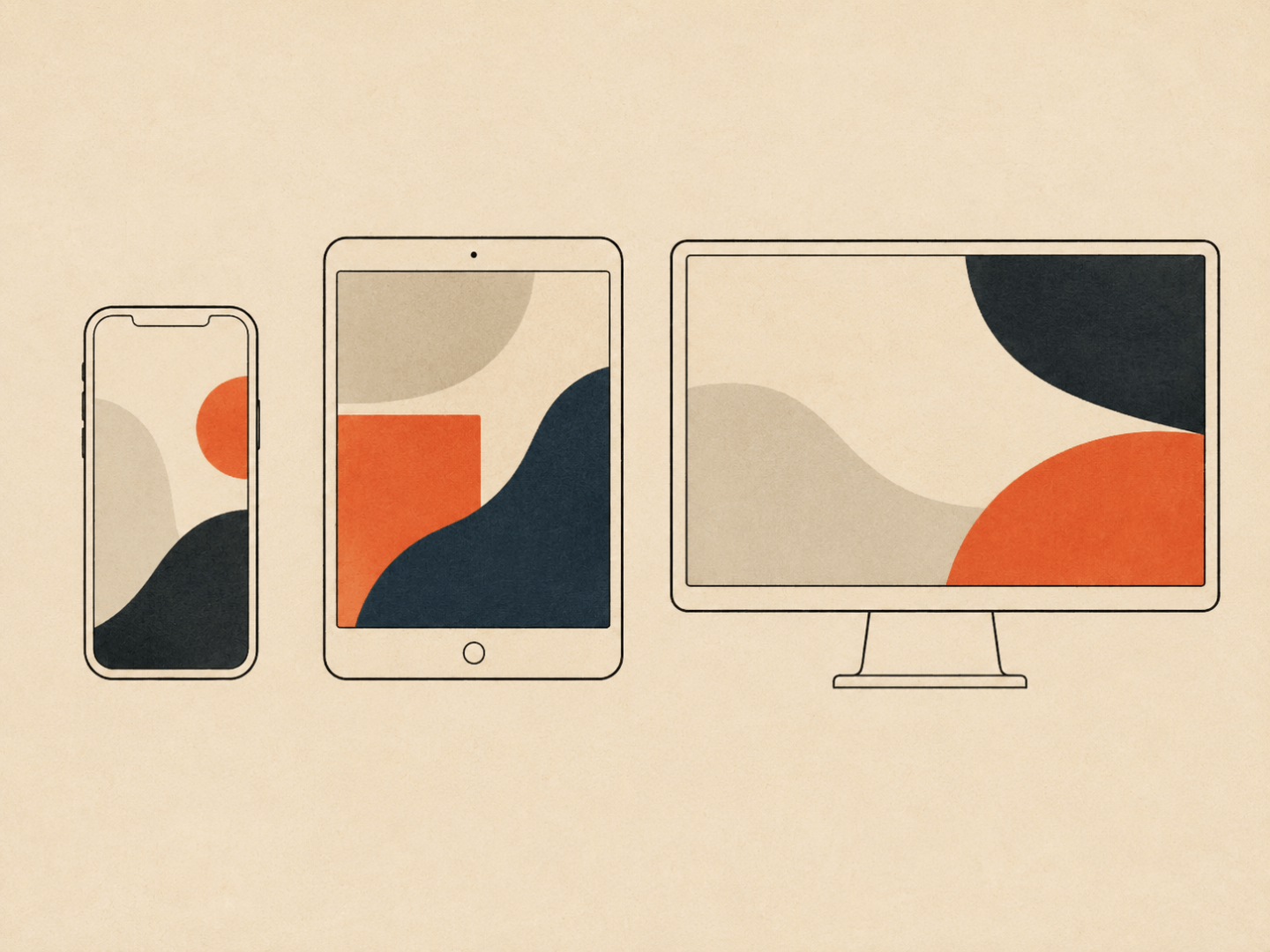
This guide draws a clean line between digital design and graphic design, and between digital design and web design, the two terms it gets confused with most often.
- Digital design applies graphic design principles (colour, type, hierarchy) to screen-based, interactive formats rather than print.
- The core difference from graphic design is medium and interactivity: digital design has to account for screens, motion, and how a user behaves, not just how something looks.
- Digital design is broader than web design. Web design is one discipline inside digital design, alongside UI design, motion graphics, digital advertising, and social content design.
- Common digital design formats include app interfaces, social media assets, email templates, digital ads, and motion graphics.
- Most working digital designers specialise in one or two of these formats rather than practising all of them at once.
What digital design actually covers
Digital design is an umbrella term for design work that lives on a screen and is usually meant to be interacted with in some way, tapped, scrolled, clicked, or swiped. That's the practical distinction from print design: a business card sits still in someone's hand, but an app icon has to work at multiple sizes, in light and dark mode, and needs to signal "tap here" without a single word of instruction.
The scope is wide. Digital design covers app and website interfaces, social media graphics, email templates, digital advertising, motion graphics, and digital product design more broadly. A digital designer working on an ecommerce brand might touch all of these in a single week: an Instagram carousel on Monday, an email campaign banner on Wednesday, and a checkout flow mockup on Friday.
Digital design vs graphic design: the actual difference
Graphic design and digital design aren't separate skill sets so much as the same skill set applied to different constraints. Both rely on composition, colour theory, and typographic hierarchy. Where they split is in what the output has to do once it leaves the design file.
A logo built for a business card only has to look right printed at 90mm wide, in one fixed orientation, under studio lighting. The same logo built for an app splash screen has to scale cleanly from a watch face to a tablet, animate on load without looking clumsy, and hold up against whatever wallpaper or dark mode setting the user has active. That second version is digital design, and it comes with a longer list of things that can go wrong.
Digital design also has to account for interaction states that print design never has to consider. A button needs a default state, a hover state, and a pressed state. Text has to remain legible when a user increases their device's font size for accessibility. None of that is optional the way it can feel optional in a static graphic, because a broken interaction state is a broken product, not just an off-brand visual.
In practice, plenty of designers do both. A freelancer might design a client's print stationery and their Instagram templates in the same afternoon. The distinction matters most when briefing work or hiring, because "I need a digital designer" and "I need a graphic designer" can point to genuinely different skill sets depending on the project.
Digital design vs web design: not the same thing
Web design and digital design get used interchangeably, but web design is a subset of digital design, not a synonym for it. Web design specifically covers how a website is structured, laid out, and navigated, the discipline we've covered in more detail in what web design actually involves.
Digital design sits a level above that. It includes web design, but also covers app interfaces, social media assets, email design, digital advertising creative, and motion graphics, formats that have nothing to do with a website's layout or navigation. A digital designer might never touch a website at all and instead specialise entirely in social content or app UI.
The practical upshot: if you're briefing a project, "digital design" is the right term when you need screen-based visual work across formats. "Web design" is the right term when the deliverable is specifically a website.
The main formats digital design covers
Digital design spans several distinct specialisations. Few designers work across all of them at a senior level, most focus on one or two.
- UI design – interfaces for apps and websites, including layout, navigation, and interactive elements
- Motion graphics – animated visuals for social content, ads, presentations, and app micro-interactions
- Digital advertising – banner ads, paid social creative, and display formats built to platform specifications
- Social media design – templates and one-off assets sized and styled for specific platforms
- Email design – layout and visual hierarchy for marketing and transactional emails
- Digital product design – the broader visual and interaction design of an app or software product, often overlapping with UX
A small business hiring for "digital design" support is usually after some combination of social assets, email templates, and ad creative rather than all six formats at once. Worth clarifying scope before briefing, since a designer who's strong in motion graphics won't necessarily be the right fit for UI work.
Skills digital designers rely on
Beyond the core design fundamentals shared with graphic design, digital designers typically work with platform-specific software (Figma or Adobe XD for interfaces, After Effects for motion, Canva or the Adobe suite for social and ad creative), and need a working understanding of how each platform's specs and constraints shape the design, an Instagram Story crop is not an Instagram feed crop, and a banner ad has hard file-size limits a print ad never will.
Accessibility awareness matters more here than in most print work too. Colour contrast ratios, tap target sizing, and legible text at various zoom levels aren't nice-to-haves in digital design, they're the difference between a design that works for every user and one that quietly excludes some of them.
Frequently asked questions
- Is digital design the same as graphic design?
- No. Digital design applies the same foundational skills as graphic design, colour, typography, layout, hierarchy, but to screen-based, interactive formats rather than static print. Graphic design can exist without ever touching a screen; digital design can't.
- Do digital designers need to know how to code?
- Not usually, though it helps in some specialisations. UI designers benefit from understanding basic HTML and CSS since it shapes what's realistically buildable, but motion, social, and ad-focused digital designers typically don't need to code at all.
- Is web design a type of digital design?
- Yes. Web design is one specialisation within the broader field of digital design, focused specifically on a website's structure, layout, and navigation. Digital design also covers app interfaces, motion graphics, social content, and digital advertising, formats that sit outside web design entirely.
- What software do digital designers use?
- It depends on the specialisation. Figma and Adobe XD are standard for interface design, After Effects for motion graphics, and Canva or the Adobe Creative Suite for social and advertising creative. Most digital designers work across two or three of these depending on their focus area.
If you're trying to work out what kind of design support your business actually needs, it often comes back to your brand fundamentals first. Our guide to what brand identity covers is a useful starting point before briefing any digital design work. You can also read more about how we approach content on this site on our About page.